Private 5G vs Wi-Fi for Warehouses and Factories: Which One Actually Fixes Your Problem?
The short answer
For offices and light indoor use, enterprise Wi-Fi wins on cost and simplicity. Private 5G earns its money where Wi-Fi structurally fails: forklift scanners that still drop after a surveyed redesign, AGVs, outdoor yards and multi-building sites. Ready-to-deploy private 5G bundles start at £9,562 inc VAT; real warehouse estates typically end up running both.
Vendor pages on this comparison almost always end the same way: “it depends — contact sales.” That is not an answer, so here is a page that actually gives one. Seneca Enterprise designs and installs both enterprise Wi-Fi and private 5G networks, which means we have no incentive to talk you into the expensive option when the cheap one solves your problem — and no incentive to pretend Wi-Fi can do things it structurally cannot. The short version: this is not a “which technology is better” question. Wi-Fi and private 5G fail in different ways, in different environments, for reasons rooted in how each was designed. Match the failure mode of your site to the technology that does not have it, and the decision usually makes itself. Below are the four technical differences that actually matter, a verdict for each environment, real private 5G entry prices and an honest cost comparison with Wi-Fi.
The Four Differences That Actually Matter
Strip away the marketing and the two technologies differ in four load-bearing ways. Everything else — throughput headlines, Wi-Fi 6 vs Wi-Fi 6E, 5G release numbers — is secondary to these.
Spectrum. Wi-Fi runs in unlicensed 2.4 GHz and 5 GHz bands shared with every neighbouring network, Bluetooth device, and badly-shielded motor on your estate. You have no legal protection against interference. Private 5G in the UK runs in the 3.8–4.2 GHz shared block (the upper part of 5G band n77) under Ofcom’s Shared Access licence framework: you license the spectrum for your site from £80 per 10 MHz per year — typically £320–£800 a year for a usable carrier (check Ofcom’s current fee schedule), and it is yours — coordinated, protected, and predictable.
Handover. This is the difference that stops forklifts. On Wi-Fi, the client device decides when to roam between access points, and cheap scanner radios cling to a fading AP until the link collapses, then spend seconds reassociating. On 5G, the network decides: it measures the radio conditions and hands the device to the next cell before the current link degrades. Deterministic, network-controlled handover versus client-decided roaming is the single biggest practical difference on any site where things move.
Authentication. Wi-Fi secures devices with pre-shared keys or certificates — passwords leak, and certificate rollouts on hundreds of scanners are a project in themselves. 5G authenticates with SIMs: identity is anchored in hardware, per-device revocable, and nothing for staff to share or mistype.
Coverage per radio. In licensed spectrum a 5G small cell on a medium-power licence transmits at up to 42 dBm EIRP — a far better link budget than Wi-Fi is allowed, so one radio covers an area that would need several Wi-Fi APs — and outdoors, a single mast-mounted small cell can cover an entire yard that a Wi-Fi mesh would chase with many weatherproof APs and backhaul hops. Fewer radios means less cabling, less containment, and fewer points of failure. The physics is covered in more depth on our technology page at https://senecaenterprise.com/technology/.
Verdict by Environment
Here is where we are supposed to say “it depends.” Instead, here are the verdicts we give paying customers.
Offices and admin areas: Wi-Fi wins, and it is not close. Laptops, phones and printers are Wi-Fi-first devices, nothing moves faster than walking pace, and a competently designed Wi-Fi network handles office density for a fraction of the cost of any private cellular deployment. If someone is quoting you private 5G for a plain office, walk away.
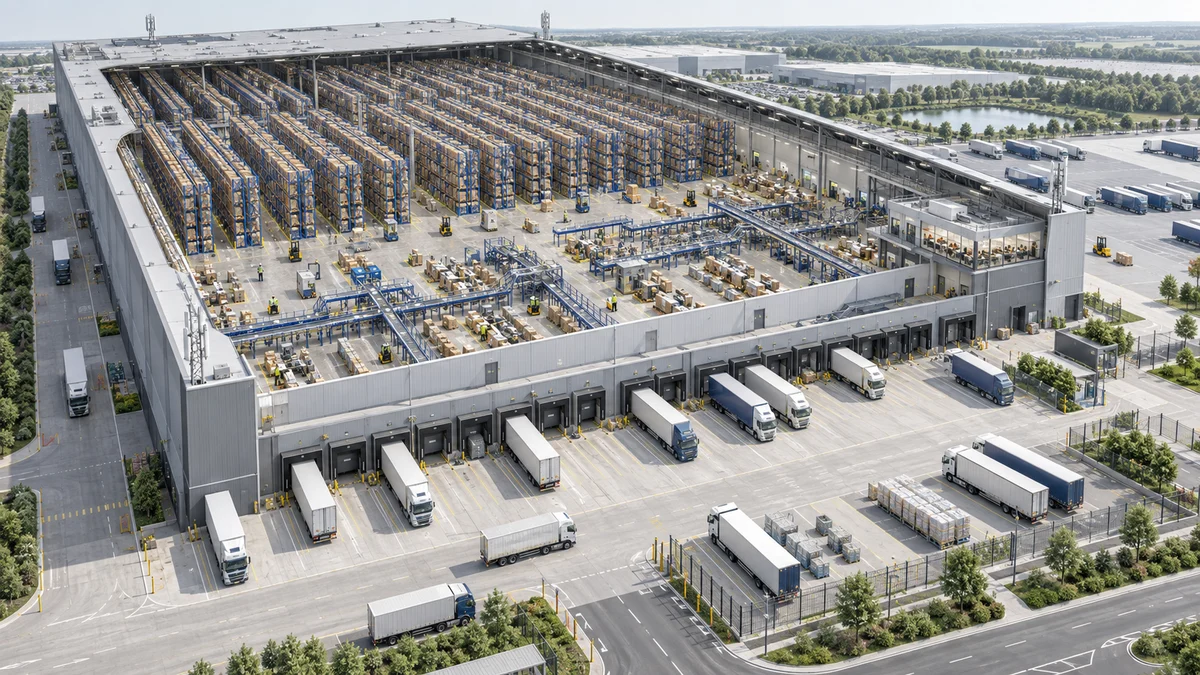
Warehouses with high racking and handheld scanners: genuinely depends — this is the one environment where the honest answer has two branches. Racking is a grid of moving metal walls; forklifts carry the clients through it at speed. A proper survey-led Wi-Fi design with tuned roaming can serve many warehouses well, and if your current network was never professionally surveyed, fix that first. But if scanners still drop after a competent redesign, you have hit Wi-Fi’s structural limit — client-decided roaming — and private 5G is the fix, not a fourth round of AP tweaking. Our logistics work is at https://senecaenterprise.com/verticals/logistics-warehousing/.
AGVs, AMRs and automation: private 5G wins. Autonomous vehicles run safety-stop timers measured in tens of milliseconds; a Wi-Fi roaming event can blow through that budget and halt the fleet. Deterministic handover exists for exactly this problem. If you are buying automation, put its network on private 5G (or private 4G/LTE — see below) and save yourself the outage investigations. This is the canonical Industry 4.0 use case we build for on manufacturing sites: https://senecaenterprise.com/verticals/manufacturing-industry-4-0/.
Outdoor yards, ports and large open sites: private 5G wins. Outdoor Wi-Fi mesh loses capacity at every wireless hop unless each node carries dedicated backhaul radios, suffers in weather, and needs power and mounting everywhere. One or two outdoor small cells cover a yard, a terminal or a laydown area with capacity to spare for gate cameras, yard trucks and telemetry.
Mixed estates — factory plus offices plus yard: hybrid, deliberately. Wi-Fi for people and their laptops; private 5G for the operational layer that moves or sits outdoors. This is not a compromise; it is what a correctly engineered site looks like, and it is what we deploy most often.
| Environment | Winner | Why |
|---|---|---|
| Offices and admin areas | Wi-Fi | Wi-Fi-first devices, easy density, far cheaper |
| Warehouse with high racking and scanners | Depends | Survey-led Wi-Fi first; private 5G if roaming drops persist |
| AGV / AMR automation | Private 5G | Deterministic handover beats safety-stop timers; Wi-Fi roaming stalls fleets |
| Outdoor yards, ports, large open sites | Private 5G | One small cell covers what a mesh chases with a dozen APs |
| Cold stores and hostile RF areas | Private 5G | Fewer radios in hostile locations, licensed spectrum, better link budget |
| Mixed estate (factory + office + yard) | Hybrid | Wi-Fi for people, private 5G for operations — the normal end state |
| Mining, quarries and large outdoor estates | Private 5G | Tens of hectares per radio; dust, vehicles and blasting zones favour a few high-mounted radios |
What Each Route Actually Costs
Entry-level private 5G is cheaper than most people think, because a technically capable team no longer needs a systems integrator to get a first network on air. Our ready-to-deploy bundles pair a small cell with a 5G core, are built to order in around 30 days, and each includes a full day of remote implementation support. The entry point is the Askey/Waveriders SCU2050 outdoor bundle with the open-source Open5G2GO core at £9,562 inc VAT (https://shop.senecaenterprise.com/products/seneca-waveriders-scu2050). Indoors, the Ataya Chorus Composite Indoor bundle starts at £12,154 inc VAT on a 1-year subscription that includes the radio (https://shop.senecaenterprise.com/products/seneca-ataya-chorus-indoor), with the Askey/AttoCore SCE2120 at £14,094 (https://shop.senecaenterprise.com/products/seneca-p5g-sce2120) and the Moso Canopy 5GID1 N77 at £14,275.63 (https://shop.senecaenterprise.com/products/seneca-p5g-moso-5gid1-n77). At the established-platform end, the Celona 5G Indoor Kit with AP24, a 3-year subscription and 20 SIMs is £16,800 (https://shop.senecaenterprise.com/products/celona-5g-indoor-academia-and-lab-kit-3-year-subscription).
For a fully engineered, installed stand-alone 5G network in a warehouse — survey, design, installation, commissioning, radio licences and first-year support included — our current price book models roughly £46,000 ex VAT at 2,500 sq m, £52,000 at 5,000 sq m, £58,000 at 10,000 sq m and £73,000 at 20,000 sq m. Treat these as modelled examples: every real site is priced from a survey, because steel, racking density and mounting positions move the numbers.
Now the honest comparison. For a simple indoor office, enterprise Wi-Fi is substantially cheaper than any figure above — a handful of access points and a switch, installed in days, no spectrum licence, no SIMs. Wi-Fi loses on cost per square metre only when the site is large, outdoor, or hostile: at that point the AP count, cabling and containment climb steeply while private 5G’s radio count barely moves. The crossover is site-specific, which is exactly what a survey establishes — and the comparison that decides it is a business case rather than a hardware list: if unreliable Wi-Fi is costing downtime, that cost goes into the calculation, and where Wi-Fi cabling does not yet exist, its infrastructure build goes in too. For small sites the recurring costs deserve a harder look than most vendor pages invite: an Ofcom Shared Access spectrum licence starts at £80 per 10 MHz per year — typically £320–£800 a year for the carrier a private 5G network actually uses, but subscription-model cores add annual cost that a perpetual-licence Wi-Fi estate does not carry.
And the entry point is a monthly number, not a capital one: on indicative 60-month finance the £9,562 starter bundle is about £172 a month — comparable to the per-AP subscriptions on a ten-AP enterprise Wi-Fi estate.
| Bundle | Type | Price inc VAT |
|---|---|---|
| Askey/Waveriders SCU2050 + Open5G2GO core | Outdoor | £9,562 |
| Ataya Chorus Composite Indoor (1-year) | Indoor | £12,154 |
| Askey/AttoCore SCE2120 | Indoor | £14,094 |
| Moso Canopy 5GID1 N77 | Indoor | £14,275.63 |
| Celona 5G Indoor Kit (AP24, 3-yr, 20 SIMs) | Indoor | £16,800 |
| Askey/AttoCore SCU2090 high-power | Outdoor | £18,498 |
| Celona 5G Outdoor Kit (AP21, 3-yr, 40 SIMs) | Outdoor | £39,812 |
When Wi-Fi (or 4G) Is the Right Answer
A comparison page from a company that sells both should tell you when not to buy its flagship product, so: do not buy private 5G if your problem is a badly designed Wi-Fi network. A large share of “Wi-Fi doesn’t work in our warehouse” cases in our experience trace to networks that were never surveyed, APs mounted where the electrician could reach rather than where the RF design needed them, and default roaming settings on the scanners. A professional survey and redesign is far cheaper than a private network and often ends the complaints. We will tell you if that is your situation, because selling you a 5G network that fixes a Wi-Fi-survey-shaped problem is how you lose customers.
Equally, do not assume you need the 5 in 5G. Barcode scanners, telemetry, voice picking and most AGV control traffic are low-bandwidth; private 4G/LTE carries them with the same deterministic handover and SIM security. Where 5G genuinely earns the upgrade — latency, device density, uplink for video — is covered honestly in our 4G vs 5G capabilities guide at https://senecaenterprise.com/4g-vs-5g-capabilities/. And if your problem is phone signal for people rather than data for devices, neither technology is the answer: engineered in-building mobile coverage runs around £3–£7 per square metre and is a different fix entirely — see https://senecaenterprise.com/in-building-mobile-coverage/.
How to Decide for Your Site
The decision sequence we use with customers is short. First, name the actual failure: dropped scanner sessions, stalled AGVs, no outdoor coverage, or just slow laptops. Second, check whether the current Wi-Fi was ever properly designed — if not, survey it before spending anything else. Third, map the failure to the decision table in the verdict section above: client-roaming and outdoor-coverage failures are structural and point to private 5G; density and dead-spot failures inside offices are design problems and point to better Wi-Fi. Fourth, cost both routes honestly, including subscriptions and licences over five years, not just the install.
If you want to explore the underlying technology first, our primers and guides are collected at https://senecaenterprise.com/resources/. If you want the question answered for your specific building, the fastest route is a survey-backed quote: tell us the site, the devices and the failure you are seeing, and we will come back with a straight verdict — Wi-Fi redesign, private 5G, or hybrid — and a price for each. Start at https://senecaenterprise.com/get-a-quote/.
Frequently asked questions
Is private 5G worth it for a factory?
It is worth it when the factory has moving clients (forklifts, AGVs, AMRs), large or outdoor areas, or OT traffic that cannot tolerate Wi-Fi roaming drops. It is not worth it for offices or a small, static shop floor that a surveyed Wi-Fi design can serve. Entry bundles start at £9,562 inc VAT, and a fully engineered warehouse network models from around £46,000 ex VAT, so the business case usually rests on the cost of stoppages, not the cost of the network.
Will Wi-Fi 6 fix forklift scanners dropping connection?
Usually not, because the failure is architectural rather than generational. Wi-Fi 6 improves throughput and density, but roaming remains client-decided: the scanner still chooses when to leave an access point, and cheap scanner radios choose badly. A survey-led redesign with tuned roaming helps and is the right first step; if drops persist after that, private 5G’s network-controlled handover is the fix Wi-Fi 7 will not deliver either.
Outdoor Wi-Fi mesh or private 4G/5G for a large yard or port?
Private cellular, almost always. Shared-backhaul mesh Wi-Fi halves usable capacity at each wireless hop (dedicated-backhaul designs avoid most of that penalty at extra cost), needs power and mounting at every node, and degrades in weather. A single outdoor 5G small cell — from £9,562 inc VAT as a ready-to-deploy bundle — covers an area that a mesh would need many APs to reach, with licensed n77 spectrum protecting it from interference. Ports add moving metal (containers, cranes) that makes Wi-Fi planning even harder.
Do I need 5G, or is private 4G/LTE enough?
For scanners, telemetry, voice picking and most AGV control traffic, private 4G/LTE is technically sufficient — the deterministic handover and SIM security you are buying exist in both. 5G earns its premium on latency-critical automation, high device density and heavy uplink such as camera streams. Since current bundles increasingly ship as 5G, most new private networks are built 5G regardless; see our 4G vs 5G capabilities guide for the honest breakdown.
What about hospitals — private 5G or Wi-Fi 6?
Both, deliberately. Wi-Fi remains right for staff laptops, guest access and most clinical devices that only support Wi-Fi. Private 5G suits the estate layer: campus-wide coverage across multiple buildings and outdoor areas, SIM-authenticated devices that must never share passwords, and connectivity that survives a crowded RF environment. Treat a hospital like the mixed-estate row of the decision table — hybrid, with each technology carrying the traffic it is designed for.
Do I need an Ofcom licence to run private 5G in the UK?
Yes, but it is straightforward and cheap. Private 5G runs in the 3.8–4.2 GHz shared block (the upper part of 5G band n77) under Ofcom’s Shared Access framework; licences cost £80 per 10 MHz per year — typically £320–£800 a year for a usable carrier, more for medium-power urban sites (check Ofcom’s current fee schedule). We handle the application as part of every installed network; spectrum fees are separate from the per-radio core licences itemised in our engineered pricing.
Tell us your site, your devices and the failure you are seeing — we will give you a straight verdict and a price for each route at senecaenterprise.com/get-a-quote/.
Ready when you are