31 minutes
Target the time lost to connection problems
Surveyed UK healthcare professionals reported losing an average of 31 minutes a day to poor connectivity. Identify the mobile gaps contributing to that wider problem.

Home / Mobile coverage / Hospitals
DAS & cellular repeating / Hospitals
Help staff stay reachable, patients contact their families and estates teams complete work where it happens. Bring mobile coverage into the everyday life of the hospital.
Seneca designs cellular coverage around your people, premises and working devices, from suitable repeaters to distributed antenna systems (DAS).
Why better coverage matters
31 minutes
Surveyed UK healthcare professionals reported losing an average of 31 minutes a day to poor connectivity. Identify the mobile gaps contributing to that wider problem.
68%
Of surveyed healthcare staff said poor mobile signal prevented contact with friends and family at work. Bring reception into the spaces where staff take their breaks.
24%
Of the hospital staff surveyed had considered leaving because of persistent connectivity issues. Make a connected working environment part of supporting the workforce.
Around your operation
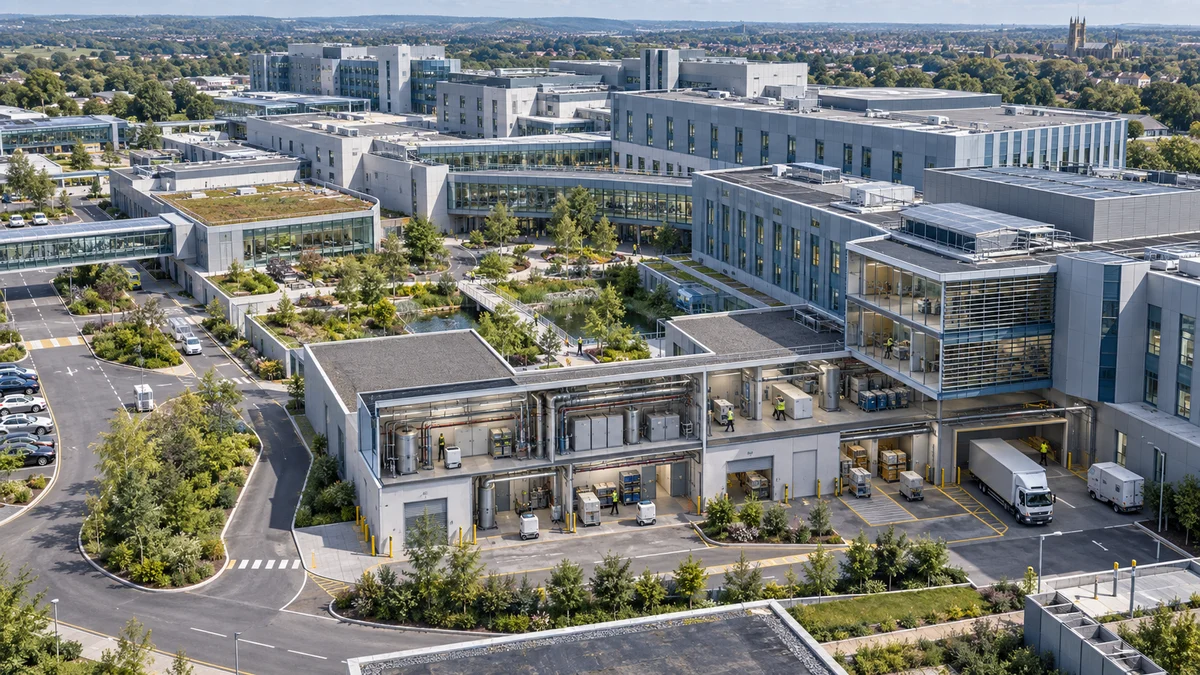
A hospital contains many different working environments: wards, outpatient clinics, staff rooms, delivery areas and dense plant spaces. Each interruption creates another call to repeat, another update to chase or another walk to find a usable signal.
Plan with clinical engineering, estates and IT around approved devices, working patterns and the wider digital estate. Mobile coverage forms one part of that estate alongside managed Wi-Fi, fixed networks and dedicated clinical communication systems.
The proposal identifies the networks, services and areas included, with a practical acceptance check built around the devices your people actually use.
In everyday use
A patient preparing to leave an outpatient appointment contacts a family member from the waiting area. Their own phone can use one of the mobile networks included in the building’s design, allowing them to coordinate collection and receive a confirmation message. Reception is available for the people who need direct assistance.
The same coverage helps visitors keep in touch with relatives while moving through agreed public areas. Hospital staff can point to the supported services without directing everyone to a single spot near the entrance. The practical value is a more connected visit, with fewer routine communication problems added to an already demanding day for patients and families.
The opportunity: easier family coordination and fewer routine requests to relay messages.
An estates engineer investigating a fault in a support area opens the approved work-order application on a managed handset. They review the asset history, contact the colleague holding the replacement part and upload a photograph of the completed work. Indoor mobile coverage carries the update from the place where the job is happening.
The facilities team sees progress in the same system and can coordinate access for the next task. Work is planned around hospital activity and the relevant engineering controls. The engineer spends less time returning to an office to synchronise records, while the manager has a clearer account of open jobs, completed actions and equipment that still needs attention.
The opportunity: less travel to update records and more complete maintenance handovers.
A hospital employee takes a break in an internal staff room and needs to return a call from their child’s school. Mobile coverage brings the supported operator service into that space, so they can speak on their usual number without leaving the building to search for a signal. They can also receive the text message needed to confirm an arrangement.
The same improvement helps colleagues keep in touch with family during long shifts and changing work patterns. Staff rooms and other agreed non-clinical areas become useful places to take a break, with fewer trips to an entrance simply to make a call. The hospital can use staff feedback and location-specific call checks to assess whether a familiar source of frustration has been addressed.
The opportunity: more useful break time and easier contact with family and support networks.
The right design for the job
A cellular repeater receives an available mobile service and retransmits it into an agreed area. A DAS distributes a suitable cellular source through antennas placed around a larger estate. These approaches can work together; the source and operator arrangements determine the available services and capacity.
Plan with clinical engineering, estates and IT around approved devices, working patterns and the wider digital estate. Mobile coverage forms one part of that estate alongside managed Wi-Fi, fixed networks and dedicated clinical communication systems.
Clinical applications, medical equipment compatibility and critical communications need the hospital’s own governance and acceptance. A public-mobile upgrade supports agreed services; it does not replace clinical network assurance or fix every Wi-Fi and digital-system issue.
Planning & costs
We assess reception, the people using the service and the areas where calls or mobile tasks break down. We recommend the signal source and distribution system and explain the installation and ongoing support costs.
We handle the technical assessment and help connect the investment to useful results. The first conversation starts with what you want to achieve.
Start with a focused deployment and expand, or move ahead with a full programme. We shape delivery around your priorities and readiness, and coordinate installation with your operation.
Talk to our teamStraight answers
The aim is to support existing subscriptions and compatible devices on the networks included in the design. We confirm operator support, frequency bands and the actual equipment before choosing the system.
Yes, suitable designs support several operators. The signal sources, equipment and authorisation arrangements determine which networks are included. The proposal lists these explicitly.
These services do different jobs. Public mobile coverage connects supported cellular devices to their operators. Wi-Fi and private networks serve their own local devices and applications. The coverage design identifies which connection each service uses.
Start with staff, patient and estates areas where communication breaks down. Tell us where reception is getting in the way. We assess the estate and help build the business case, then manage the installation and support around your operation.
We match coverage to the building, the mobile operators your people use and the available signal and capacity. Survey percentages describe the problem people experience; they are not installation improvement figures.
Help staff stay reachable, patients contact their families and estates teams complete work where it happens. Bring mobile coverage into the everyday life of the hospital.