Less waiting
Connect before leaving the vehicle bay
Indoor cellular coverage connects compatible vehicle computers while crews are still in the bay, so operational updates can reach the vehicle before departure.

Home / Mobile coverage / Emergency services
DAS & cellular repeating / Emergency services
Connect the vehicle bay, the workshop and the staff area. Give support teams the mobile service to complete checks, share updates and keep station work moving.
Seneca designs cellular coverage around your people, premises and working devices, from suitable repeaters to distributed antenna systems (DAS).
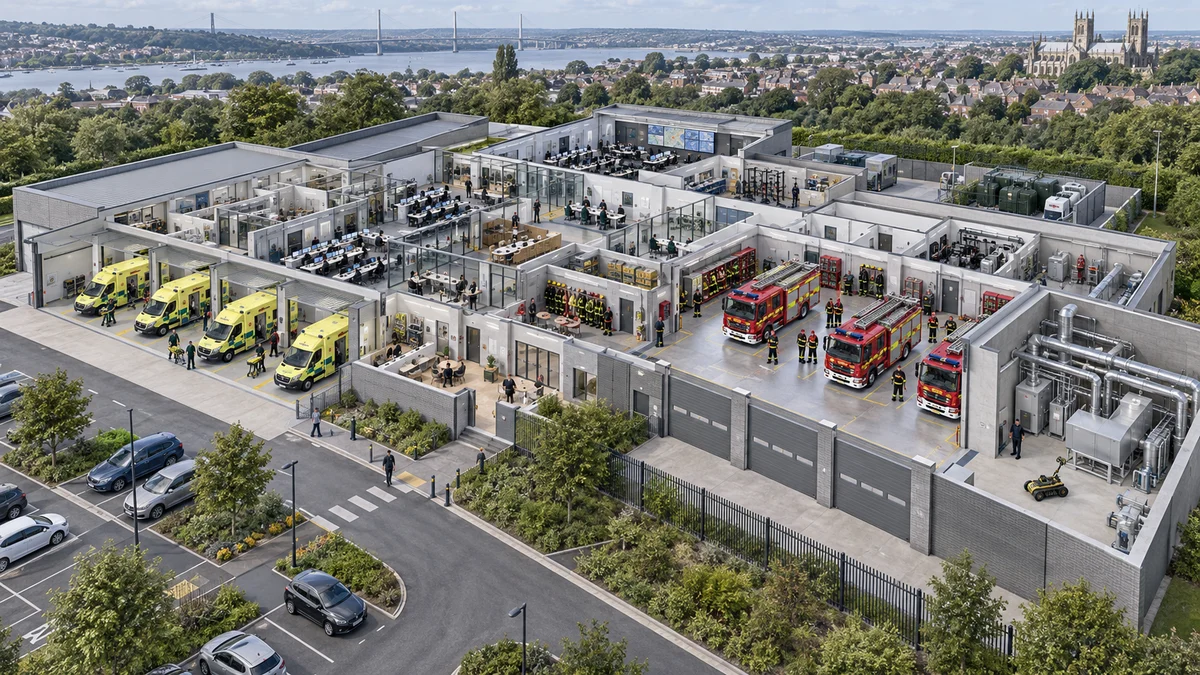
Why better coverage matters
Less waiting
Indoor cellular coverage connects compatible vehicle computers while crews are still in the bay, so operational updates can reach the vehicle before departure.
Clearer records
A connected vehicle bay lets computers exchange records directly, reducing the need to relay missing updates by phone.
Better coordination
Extend supported public mobile calls and messages into station offices, staff rooms and vehicle areas so routine communication follows the team.
Around your operation
Modern station buildings can block the outdoor cellular signal with insulation, glazing and metal structures. A phone that works in the yard may lose service beside the vehicle, leaving ordinary staff communication and support applications waiting for the next connection.
Design commercial mobile coverage around the estate’s approved applications and working areas. Operational radio and mission-critical communications have their own requirements, stakeholders and acceptance process, which must be coordinated separately.
The proposal identifies the networks, services and areas included, with a practical acceptance check built around the devices your people actually use.
In everyday use
A crew member checks equipment in a station vehicle bay and records the results on an approved cellular tablet. Photographs and stock requirements upload while the person is beside the vehicle, and the station support team sees the completed record in its normal system. A missing item becomes a named task for the team responsible.
The workshop can review the observation and prepare the required replacement without asking the crew to repeat the details at an office terminal. Indoor mobile coverage supports the authorised readiness application and its audit trail. The station keeps its established operational radio, mobilisation and clinical systems under their own assurance arrangements, while reducing friction in the surrounding support work.
The opportunity: less duplicate entry and clearer readiness records at the point of inspection.
A technician finds a fault during a scheduled inspection and sends an image, asset identifier and description from a managed phone. The workshop supervisor reviews the information while moving between the office and stores, confirms the part required and assigns the work in the maintenance application. The conversation stays attached to the asset record.
When the job is complete, the technician uploads the result and the next shift can see what was done. Coverage across workshops, stores and staff areas allows the people responsible to use the same application wherever the task takes them. Managers gain a clearer view of open support work and spend less time reconstructing progress from separate calls.
The opportunity: quicker maintenance handovers and fewer missing details between shifts.
A station manager needs to confirm a staffing change with a colleague who is checking equipment in an internal store. The call reaches the colleague on the supported mobile network, allowing them to discuss the change without leaving the task to find reception. An approved staff application then carries the updated rota or handover note to the people concerned.
The next shift can review the same information from staff rooms, offices and agreed vehicle-bay areas. Ordinary mobile communication supports these administrative conversations alongside the service’s established operational systems. The station can reduce repeated attempts to reach colleagues and keep routine changes attached to a shared record, leaving managers with fewer separate messages to reconcile at the end of the shift.
The opportunity: less chasing during handovers and clearer routine staffing communication.
The right design for the job
A cellular repeater receives an available mobile service and retransmits it into an agreed area. A DAS distributes a suitable cellular source through antennas placed around a larger estate. These approaches can work together; the source and operator arrangements determine the available services and capacity.
Design commercial mobile coverage around the estate’s approved applications and working areas. Operational radio and mission-critical communications have their own requirements, stakeholders and acceptance process, which must be coordinated separately.
Commercial cellular coverage does not establish Airwave or ESN coverage, priority, availability or compliance. Mission-critical communications must be specified and accepted with the relevant emergency-service authority and network stakeholders. The overseas example illustrates building coverage; it is not evidence of UK critical-radio performance.
Planning & costs
We assess reception, the people using the service and the areas where calls or mobile tasks break down. We recommend the signal source and distribution system and explain the installation and ongoing support costs.
We handle the technical assessment and help connect the investment to useful results. The first conversation starts with what you want to achieve.
Start with a focused deployment and expand, or move ahead with a full programme. We shape delivery around your priorities and readiness, and coordinate installation with your operation.
Talk to our teamStraight answers
The aim is to support existing subscriptions and compatible devices on the networks included in the design. We confirm operator support, frequency bands and the actual equipment before choosing the system.
Yes, suitable designs support several operators. The signal sources, equipment and authorisation arrangements determine which networks are included. The proposal lists these explicitly.
These services do different jobs. Public mobile coverage connects supported cellular devices to their operators. Wi-Fi and private networks serve their own local devices and applications. The coverage design identifies which connection each service uses.
Start with station bays, workshops and everyday support applications. Tell us where reception is getting in the way. We assess the estate and help build the business case, then manage the installation and support around your operation.
We match coverage to the building, the mobile operators your people use and the available signal and capacity. Survey percentages describe the problem people experience; they are not installation improvement figures.
Connect the vehicle bay, the workshop and the staff area. Give support teams the mobile service to complete checks, share updates and keep station work moving.