Field Tested
Private 5G supporting agricultural robots and drones
Connected robots and drones bring automation into the field, carrying out crop inspections and sharing findings as they work.

Home / Private 5G / Agriculture
Private networks / Agriculture
Connect farm teams, machinery and monitoring applications across the places you work. Private 5G brings information from fields, livestock buildings and remote yards back to the people making decisions.
See a crop concern while the robot is still in the row. Bring livestock alerts into the morning round. Send a field report without driving back to the office. Build the connection around your land and the tasks that keep the farm moving.
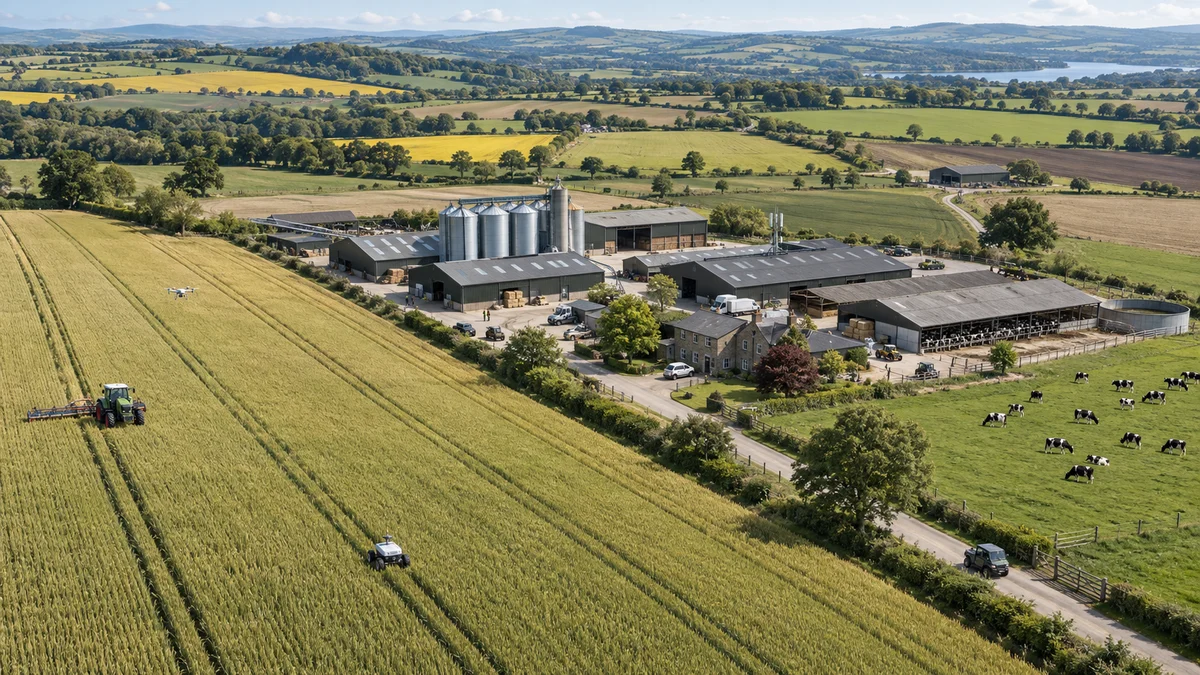
Agricultural robotics in practice
Field Tested
Connected robots and drones bring automation into the field, carrying out crop inspections and sharing findings as they work.
Live video
Live video and sensor readings give your team a view from the machine, helping them spot crop concerns and target attention where it is needed.
Multi-robot
Private 5G connects multiple autonomous machines at once, supporting robot-to-robot communication and coordinated work under central supervision.
From remote reading to useful decision
A farm’s working day stretches across fields, sheds, stores and access tracks. A useful reading may be on a sensor at the far end of a field, an alert on a livestock system or an image on a machine’s camera. Getting that information to the right person makes it easier to decide where attention is needed.
Private 5G provides a dedicated connection for selected devices and applications across the working area. Coverage follows the site design, while suitable gateways connect lower-power sensors and existing equipment into the wider network. The result is a practical route from the place where something happens to the person who can act.
Practical agriculture use cases
Connect a task your team already understands, with a clear route from observation to action.
A field robot travels a planned inspection route, capturing images of the crop and tagging each observation with its position. Its inspection application highlights an unusual patch for review. Private 5G carries the images and progress updates back to the farm team, who can look at the finding while the machine continues its survey.
The manager compares the observation with recent soil readings and the field record, then sends a colleague to check the area that needs attention. The result, photograph and follow-up task stay together in the same record. Instead of waiting for a complete download at the yard, the team can start its investigation during the working day and build a clearer picture of how the crop is changing.
A compatible livestock-monitoring system flags a change in an animal’s activity pattern. Its gateway sends the update over the farm’s private network to the herd application, where the stockperson can review the animal’s identity, recent observations and recorded location. The alert becomes a useful starting point for a closer check during the next round.
The stockperson opens the record on a connected handset, adds their observations and shares the update with the farm manager or veterinary team when needed. Building cameras can provide another view of a pen or handling area, while the shared record helps colleagues follow the same animal across shifts. The technology brings information together so the people caring for the herd can give attention where it is needed.
A vehicle pulls into a remote field entrance after hours and stops beside the gate. Connected CCTV captures the activity, while automatic number-plate recognition (ANPR) records the registration where it is readable. Video analytics flags the unexpected stop or activity in a monitored area, and private 5G carries an automated alert with a short clip, timestamp and camera location to the farm manager’s phone.
The manager opens the live view to check whether it is an expected visit or suspected fly-tipping. If waste has been left, the team preserves the relevant footage, vehicle images and plate read together in an incident record, ready to support a report to the council or police. Camera alerts from gates, lay-bys and access tracks give the team a clearer view of remote locations without waiting for someone to discover the rubbish on the next round.
The buildings matter too
Grain stores, livestock sheds and equipment yards generate information throughout the day. Temperature readings, access events and machinery status can reach the applications used by the farm team through compatible devices and gateways.
A camera at a remote entrance helps the manager review a delivery or access alert. A connected tablet lets a worker record an equipment check beside the asset. Local storage keeps selected footage and records close to the operation.
Bring these practical tasks into the site plan alongside the field routes, so the network serves the full working day.
Built around the land
Hills, trees, growing crops and building materials shape the radio design. We start with the routes and locations you need to connect, then assess mounting positions, power and links between network equipment. Seasonal work and machinery movements are part of that picture from the start.
A small battery sensor has different needs from a moving robot or live camera. Existing sensor networks can feed through a gateway, while compatible cellular devices connect directly. Machine navigation and positioning come from the appropriate equipment systems; private 5G carries the agreed data and application traffic.
Explore wider connectivity options → Private compute → Managed open-source applications →
Planning & costs
We assess your estate, devices and applications, then design connectivity around the work you want to improve. We help build a business case around the opportunity, deployment costs and ongoing support.
We handle the technical assessment and help connect the investment to useful results. The first conversation starts with what you want to achieve.
Start with a focused deployment and expand, or move ahead with a full programme. We shape delivery around your priorities and readiness, and coordinate installation with your operation.
Talk to our teamPlanning questions
A private network uses its own on-site radio equipment, designed around your working area. Power, spectrum and the connections between radios and network systems form part of the project. Internet access is planned separately where applications need it.
No. Compatible cellular devices can connect directly, while suitable gateways collect readings from existing sensor networks and send them over private 5G. Device power, data volume and application interfaces guide the choice.
Compatible equipment can exchange telemetry, images and application data over the private network. Integration follows the machine supplier’s communication requirements and operating arrangements, alongside its own navigation and safety systems.
Selected applications and records can run on local computing infrastructure. Existing cloud services can also be connected where required. We plan access, storage and recovery around the applications you choose.
A map of the working areas, buildings and routes, plus the devices and first task you want to connect. The site assessment then considers terrain, power, installation and application integration to produce a defined proposal.
Read the private 5G cost guide →Connect the places you work
Show us the land, the equipment and the task that loses time. We’ll help bring them together in a practical first project.
We design coverage around your land, equipment and working tasks. Use cases and the staff-time calculation illustrate the opportunity; your proposal sets out the deployment and service scope.
Information may change or contain errors. Project-specific specifications, delivery commitments and commercial terms are set out in the agreed proposal and contract. Illustrations show concepts; source records are retained by Seneca.