Robotic inspection
Inspect assets through connected machines
Robots and drones carry inspection cameras and sensors around industrial assets, sending findings to the people responsible for tanks, pipework and plant.

Home / Private 5G / Oil, Gas & Energy
Private networks / Oil, Gas & Energy
Connect inspection findings, field teams and plant information across demanding industrial sites. Private 5G carries the observations that help engineers plan work and coordinate a response.
A robot’s thermal image, an instrument trend and an engineer’s inspection note become more useful when the team can review them together.
Private 5G in practice
Robotic inspection
Robots and drones carry inspection cameras and sensors around industrial assets, sending findings to the people responsible for tanks, pipework and plant.
Condition data
Connected vibration and temperature sensors feed monitoring applications, helping maintenance teams identify changing equipment conditions.
Field teams
Mobile communication and remote-support applications connect field teams to colleagues and technical information while they work around the estate.
The operational connection
Energy operations spread equipment across pipe racks, storage areas, compressor houses and remote service routes. Finding a change is only the start: the team needs its location, history and supporting evidence before deciding what to do next.
A private network connects selected devices to local applications across these working areas. Edge AI analyses inspection images close to the plant and presents findings to authorised staff, while existing plant controls continue their defined role.
Practical oil, gas & energy use cases
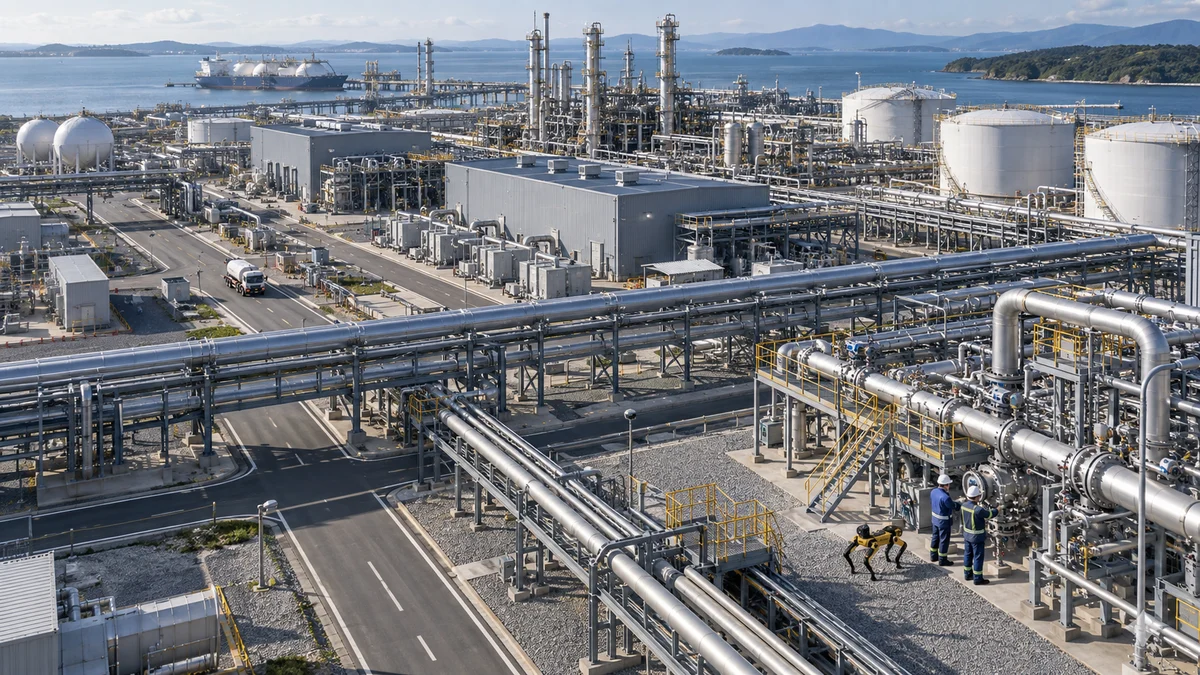
A robot dog walks an approved inspection route beside compressors and pipework, capturing thermal and visual observations. A local edge AI application compares readings and images with the inspection baseline, then highlights a change. Private 5G carries the finding, asset reference and camera view to the engineer.
The engineer reviews the evidence against the asset history and assigns the next inspection or maintenance action. The record follows the finding from the robot’s observation to the completed work. The route uses equipment appropriate to the area classification, with operations staff retaining responsibility for the response.
An equipment-monitoring application identifies an unusual trend and sends a notification to the responsible team. The technician opens the relevant readings and approved asset documents on a connected tablet beside the equipment. Private 5G links that field session to the local maintenance environment.
The technician adds photographs and observations, then discusses the finding with an engineer using a live view when useful. Work orders, parts requirements and shift notes remain linked to the asset. The team spends less time relaying descriptions and more time assessing the actual condition.
A fixed camera or approved inspection sensor sends data from a drainage or containment area to a local edge AI application. The application flags an unexpected visual change for review and attaches the location and time. The site team receives the event through the private network and checks the supporting view.
Once the observation is confirmed, the supervisor coordinates the appropriate site response and records the follow-up actions. Images and completion notes stay together, giving the next shift a clear account of the event. The system connects observations to people; the site’s established response procedures guide the action.
Robotics and edge AI
Let a robot dog bring the inspection to the engineer. The robot gathers observations or completes its assigned movement; the private network carries the agreed data. Edge AI means processing selected images or sensor readings on local computing infrastructure.
Choose what the application should identify and who receives the result. A reviewed finding can become a work order, a confirmed handover or a record for the next shift, with the supporting evidence kept alongside it.
Explore private AI → Private compute → Managed open-source applications →
Built around the operation
Equipment selection follows each area’s classification and installation requirements. Plan radio locations, power, backhaul and maintenance access around the working plant rather than treating the site as an open field.
Define the interfaces between inspection applications, operational systems and business users. Segment access, host selected analytics locally and agree support responsibilities with the plant’s engineering team.
Planning & costs
We assess your estate, devices and applications, then design connectivity around the work you want to improve. We help build a business case around the opportunity, deployment costs and ongoing support.
We handle the technical assessment and help connect the investment to useful results. The first conversation starts with what you want to achieve.
Start with a focused deployment and expand, or move ahead with a full programme. We shape delivery around your priorities and readiness, and coordinate installation with your operation.
Talk to our teamPlanning questions
Equipment must be selected for the specific area and task, including any hazardous-area requirements. That selection is part of the project design.
Compatible cellular devices connect directly; suitable gateways can link other equipment. We check the exact device models, interfaces and application requirements before choosing the design.
Selected analytics can run on local servers, with access and storage designed around the workflow. The application identifies agreed events; staff review the result and retain responsibility for the operational response.
A site plan, the chosen task, device details and the applications involved provide a useful start. We then assess coverage, integration, installation and ongoing support for a defined proposal.
Read the private 5G cost guide →Your operation, connected
Show us the working area, the equipment and the point where information stops flowing. We’ll help turn it into a practical first project.
Coverage and performance are designed around your site, devices and applications. We set out the agreed service and delivery scope in your proposal.
Use cases illustrate how the service can support an operation. Project specifications and commercial terms are confirmed in the agreed proposal and contract.