100 Mbps+
Faster broadband for remote properties
A rural network upgrade increased speeds from around 2 Mbps to 100 Mbps or more, giving remote homes and businesses a faster connection.

Home / Private 5G / Hard-to-Reach Rural Broadband
Private networks / Hard-to-Reach Rural Broadband
Connect outlying homes, workshops and estate buildings to the internet feed available in your area. Seneca designs, deploys and manages rural wireless infrastructure for UK estates and operators, using private 5G and fixed wireless access to reach the premises that need it.
One coordinated design, from the available internet feed to the receiver and local network at each building.
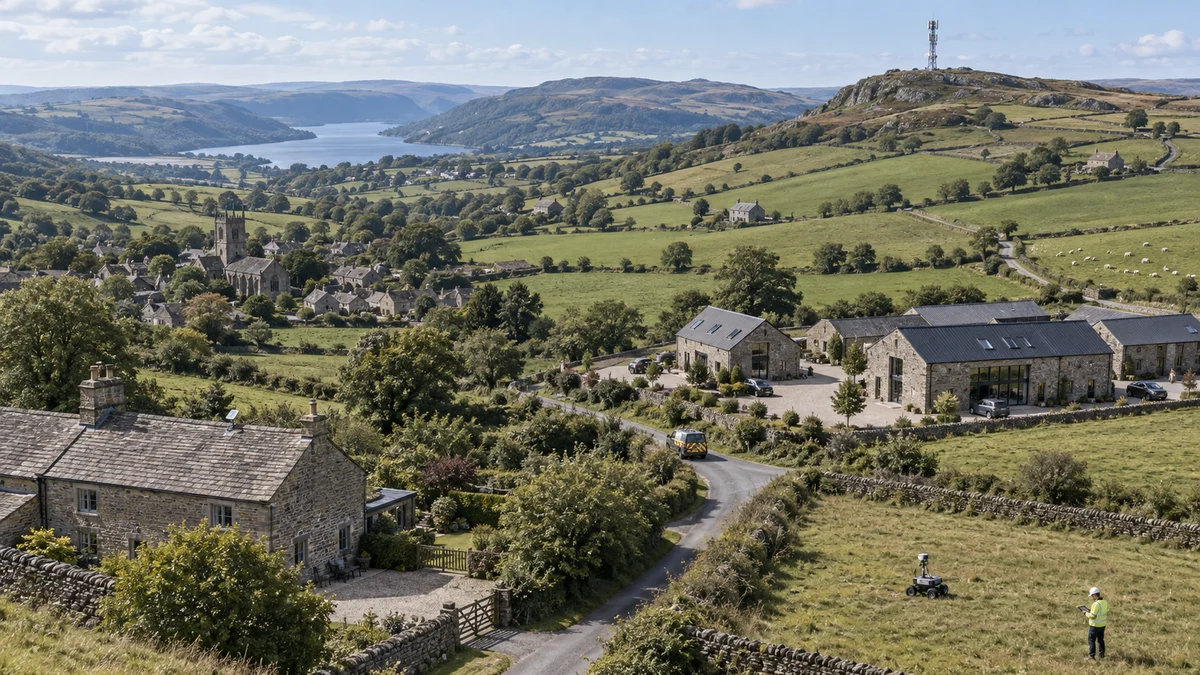
Private 5G in practice
100 Mbps+
A rural network upgrade increased speeds from around 2 Mbps to 100 Mbps or more, giving remote homes and businesses a faster connection.
Shared reach
Private cellular coverage distributes an internet connection across separated homes and business premises, extending service beyond the reach of individual cable routes.
Building Wi-Fi
A private 5G router feeds local Wi-Fi access points, giving familiar phones, laptops and office devices a connection inside the building.
The operational connection
Give remote properties a usable connection without making every user travel to find one. We assess the buildings, distances and available internet feed, then design the local distribution around the estate or operator’s service.
Private 5G carries traffic between the distribution network and receivers at the premises. Each receiver feeds local Wi-Fi or a wired network. Seneca delivers and manages the infrastructure, with internet provision and end-user support assigned clearly in the agreed scope.
Practical hard-to-reach rural broadband use cases
Bring connectivity from an available upstream connection to premises beyond its immediate reach. Private 5G links a receiver at each property to the local distribution network; Wi-Fi or cabling serves devices inside. Seneca designs and deploys the infrastructure, with the internet supplier and end-user support responsibilities agreed as part of the project.
Connect estate workshops and tenant buildings to the services their occupants use every day. A wireless receiver feeds the building’s local network, allowing teams to share drawings, process orders and join calls. Separate access for tenants and estate staff keeps each connection managed around its users.
Extend the planned network to another group of rural buildings. Seneca assesses terrain, receiver locations, power and shared demand alongside available backhaul capacity. Premises are added with a consistent installation and handover process, so the estate or operator can manage the service as it expands.
Connected premises
Connect the complete route from the internet feed to the device inside the building. Backhaul capacity, radio reach, premises receivers and indoor Wi-Fi all contribute to the service people use.
We coordinate the network design, installation and handover with the estate or operator. Capacity follows concurrent demand, while clear support responsibilities make faults easier to diagnose and resolve.
Built around the operation
Start with the properties, terrain, trees and suitable equipment locations. Compare available fibre, fixed wireless, mobile and satellite connections for the internet feed, then design the local distribution and indoor coverage together.
Size the internet feed and radio capacity for concurrent household and business demand. Agree property installation, power, support and expansion arrangements, and keep operational devices separate from household traffic.
Planning & costs
We assess the site, available internet feed and buildings or areas to connect, then help build the business case around installation and ongoing management.
We agree the delivery scope and support responsibilities with you before work begins.
Connect a defined part of the estate or plan a wider rollout. We coordinate delivery around your operating schedule and the areas you want to bring online.
Talk to our teamPlanning questions
The network needs an upstream internet service. Seneca designs the infrastructure around the available feed and agrees who supplies that service, who operates the network and who supports end users.
Users connect through the building’s Wi-Fi or wired network. A compatible premises receiver connects that local network to private 5G.
We size the upstream feed and local network around the premises, expected concurrent use and agreed service. Adding properties includes a review of that shared demand.
Tell us which buildings need connecting and what connectivity is available today. We assess the estate and help build the delivery plan and business case.
Read the private 5G cost guide →The rural broadband examples range from £46,561 to £87,846 ex VAT, including installation and one-year support. The focused and larger site assumptions are shown in the cost table. These are indicative calculator examples, confirmed by survey; exclusions are listed with the table.
Your operation, connected
Tell us which buildings need connecting and what connectivity is available today. We’ll assess the estate and help plan the infrastructure and ongoing support.
Coverage and performance are designed around your site, devices and applications. We set out the agreed service and delivery scope in your proposal.
Use cases illustrate how the service can support an operation. Project specifications and commercial terms are confirmed in the agreed proposal and contract.