Fan experience
Keep supporters part of the conversation
Mobile coverage connects supporters to messages, shared moments and event information across the venue, making communication part of the match-day experience.

Home / Mobile coverage / Stadiums
DAS & cellular repeating / Stadiums
Help fans meet, share and enjoy the event. Connect the concourse, hospitality suites and working areas with cellular service designed around the size of the crowd.
Seneca designs cellular coverage around your people, premises and working devices, from suitable repeaters to distributed antenna systems (DAS).
Why better coverage matters
Fan experience
Mobile coverage connects supporters to messages, shared moments and event information across the venue, making communication part of the match-day experience.
Crowd demand
Distributed antennas and appropriately sized operator capacity work together to serve busy stands and concourses. Coverage and crowd demand belong in the same design.
Shared estate
A shared indoor system distributes the included operator services through the venue, bringing multiple networks into one coordinated coverage plan.
Around your operation
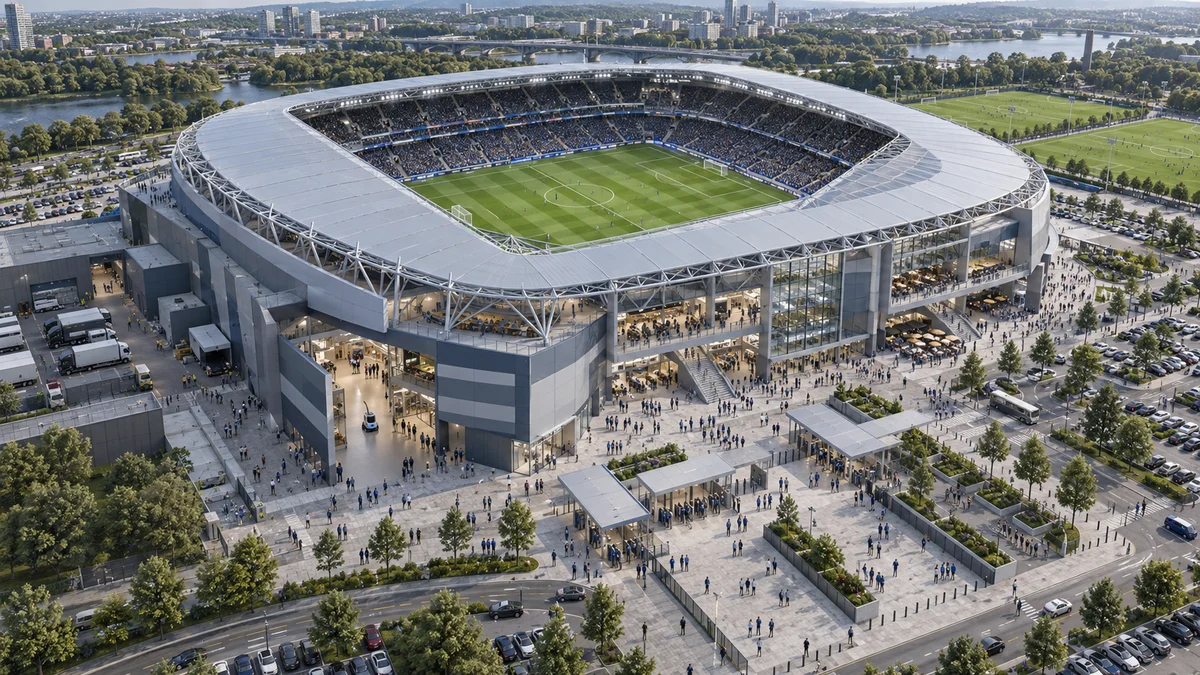
A stadium can have visible mobile signal and still struggle when thousands of people use it at once. Match-day demand peaks around arrival, half-time and departure, while staff and concessions continue to work behind the scenes.
A stadium DAS needs suitable operator sources and capacity planning as well as antenna coverage. Design around seated areas, concourses, entrances, hospitality and back-of-house spaces, with event-day testing that reflects actual crowd demand.
The proposal identifies the networks, services and areas included, with a practical acceptance check built around the devices your people actually use.
In everyday use
Supporters arrive at the stadium and use their phones to contact friends, retrieve booking information and find their hospitality entrance. Cellular coverage is planned around these busy gathering points as well as the seating bowl. Staff can help visitors where they are, with agreed mobile services available along the route into the venue.
Demand changes as the crowd enters, gathers at half-time and leaves together. The design therefore combines operator capacity with antenna placement and the venue’s ticketing arrangements. Offline ticket options and other established entry procedures remain part of the event operation, while better planned mobile service supports a smoother arrival and fewer avoidable visits to an assistance desk.
The opportunity: easier coordination for supporters and less friction around event arrival.
A hospitality host receives a guest request while checking a suite away from the main concourse. The approved service application carries the update to the catering team, and the host confirms progress without leaving the guests. Supported cellular payment devices can complete transactions in the areas included in the installation.
At the same time, the duty manager sees requests and exceptions across several hospitality spaces. Event-day testing checks the actual applications under representative load, with payment systems and staff networks included in the wider plan. The team can spend more time serving guests and less time walking between rooms to pass information or find a working connection.
The opportunity: faster attention to guest requests and fewer communication interruptions during service.
A concession supervisor needs additional stock during a busy interval and calls the colleague coordinating replenishment from a back-of-house store. Mobile coverage reaches both working areas on the agreed networks, allowing the team to confirm the requirement and the delivery point. The supervisor stays close to the service queue while the stock team prepares the replenishment.
Elsewhere, hospitality and facilities managers use their approved phones to coordinate routine service issues without walking to a known reception spot. The stadium plans this working demand alongside crowd use and operator capacity, then checks the actual calls and applications during an event. Teams can resolve more of the small interruptions where they occur, keeping colleagues focused on serving supporters and guests.
The opportunity: quicker routine coordination and less time leaving the service area to reach a colleague.
The right design for the job
A cellular repeater receives an available mobile service and retransmits it into an agreed area. A DAS distributes a suitable cellular source through antennas placed around a larger estate. These approaches can work together; the source and operator arrangements determine the available services and capacity.
A stadium DAS needs suitable operator sources and capacity planning as well as antenna coverage. Design around seated areas, concourses, entrances, hospitality and back-of-house spaces, with event-day testing that reflects actual crowd demand.
A repeater redistributes an available service; it does not by itself create the capacity for a full stadium. Operator involvement, demand modelling and suitable signal sources are central to the design. Public-protection and emergency-service communication requirements are assessed separately.
Planning & costs
We assess reception, the people using the service and the areas where calls or mobile tasks break down. We recommend the signal source and distribution system and explain the installation and ongoing support costs.
We handle the technical assessment and help connect the investment to useful results. The first conversation starts with what you want to achieve.
Start with a focused deployment and expand, or move ahead with a full programme. We shape delivery around your priorities and readiness, and coordinate installation with your operation.
Talk to our teamStraight answers
The aim is to support existing subscriptions and compatible devices on the networks included in the design. We confirm operator support, frequency bands and the actual equipment before choosing the system.
Yes, suitable designs support several operators. The signal sources, equipment and authorisation arrangements determine which networks are included. The proposal lists these explicitly.
These services do different jobs. Public mobile coverage connects supported cellular devices to their operators. Wi-Fi and private networks serve their own local devices and applications. The coverage design identifies which connection each service uses.
Start with the busiest event, the busiest areas and the operators your audience uses. Tell us where reception is getting in the way. We assess the estate and help build the business case, then manage the installation and support around your operation.
We match coverage to the building, the mobile operators your people use and the available signal and capacity. Survey percentages describe the problem people experience; they are not installation improvement figures.
Help fans meet, share and enjoy the event. Connect the concourse, hospitality suites and working areas with cellular service designed around the size of the crowd.