Baggage
Connect the next stage of baggage handling
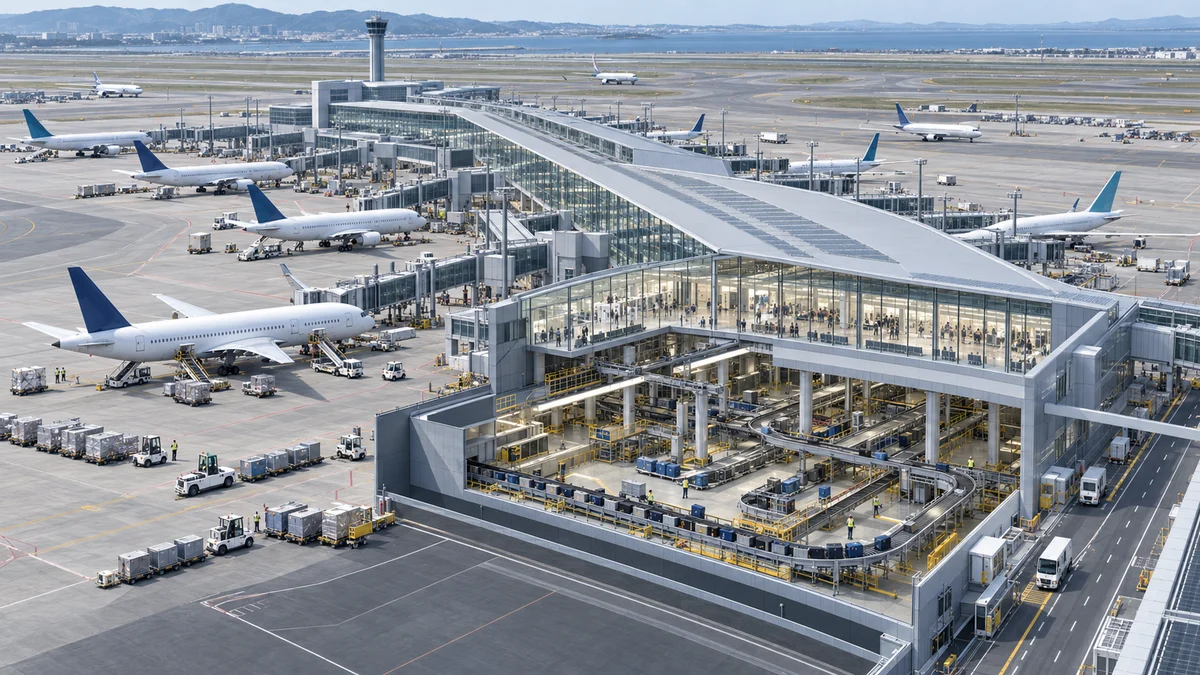
Private 5G supports connected tug trains and automated baggage systems, carrying task and status updates between mobile equipment and operational applications.

Home / Private 5G / Airports
Private networks / Airports
Connect baggage movements, ground-service teams and inspection applications from the terminal to the stand. Private 5G carries the updates that help people prepare the next departure.
A bag, a vehicle and a servicing task each have their own journey through the airport. Bring their progress into the operational picture so the next team can see what is ready and what needs attention.
Private 5G in practice
Baggage
Private 5G supports connected tug trains and automated baggage systems, carrying task and status updates between mobile equipment and operational applications.
Ground teams
Mobile equipment shares progress from the apron, giving ground teams operational updates where the servicing work happens.
Operational video
Camera feeds and ground-vehicle telemetry bring airport activity into operational systems, helping teams see conditions and coordinate their response.
The operational connection
An airport turnaround is a series of handovers between teams that work in different places. A late update from the baggage hall or a vehicle waiting at the wrong stand creates work for everyone downstream. The useful connection follows the task from allocation through to completion.
A dedicated mobile network links selected equipment and applications across baggage areas, aprons and maintenance facilities. Edge AI processes camera or inspection data on local servers, turning a stream of images into a specific event for an operator to review.
Practical airports use cases
A baggage tug receives its assigned load and route from the handling application. Private 5G carries job updates as the vehicle moves between the baggage hall and approved airside working areas. The handling team can see when the load has been collected, where the task stands and which handover is due next.
When a stand allocation changes, the dispatcher updates the job through the fleet system. The driver or robot supervisor receives the revised instruction, while the baggage record retains the completed movements. The vehicle’s own navigation and safety systems manage movement; the network connects the task to the wider departure plan.
A stand camera sends selected views to a local edge AI application, which identifies operational events such as a service vehicle arriving or a piece of equipment remaining in a marked zone. Private 5G carries the images and event updates to the airport’s operations environment. The coordinator reviews the event alongside the servicing schedule.
Instead of watching every feed continuously, the team can focus on an exception and contact the responsible service provider. Confirmed events become part of the turnaround record, making it easier to understand a delay after the aircraft has departed. The application supports coordination without making aircraft-clearance decisions.
An inspection robot follows an approved route through a maintenance facility, capturing equipment images and thermal observations. A local edge AI model highlights changes from previous inspections, and private 5G carries the selected images to the engineering team. The engineer opens the finding against the relevant asset record.
The team reviews the observation, assigns a physical check where needed and attaches the outcome to the maintenance history. Images remain linked to the inspection route and time, so the next shift can see what has already been investigated. Robotics gathers the observations; engineers retain ownership of the inspection decision.
Robotics and edge AI
Keep the baggage robot connected to its next job. The robot gathers observations or completes its assigned movement; the private network carries the agreed data. Edge AI means processing selected images or sensor readings on local computing infrastructure.
Choose what the application should identify and who receives the result. A reviewed finding can become a work order, a confirmed handover or a record for the next shift, with the supporting evidence kept alongside it.
Explore private AI → Private compute → Managed open-source applications →
Built around the operation
Apron geometry, moving aircraft, terminal structures and baggage-hall equipment shape coverage. Define the operational zones, airside installation arrangements and peak video traffic before selecting radio positions.
Connect the baggage, fleet and airport operations interfaces around one handover first. Keep operational devices separated from passenger services, with access appropriate to each ground-service team.
Planning & costs
We assess your estate, devices and applications, then design connectivity around the work you want to improve. We help build a business case around the opportunity, deployment costs and ongoing support.
We handle the technical assessment and help connect the investment to useful results. The first conversation starts with what you want to achieve.
Start with a focused deployment and expand, or move ahead with a full programme. We shape delivery around your priorities and readiness, and coordinate installation with your operation.
Talk to our teamPlanning questions
The private network serves selected operational devices and workflows. Passenger Wi-Fi and public mobile coverage have their own purpose and can continue alongside it.
Compatible cellular devices connect directly; suitable gateways can link other equipment. We check the exact device models, interfaces and application requirements before choosing the design.
Selected analytics can run on local servers, with access and storage designed around the workflow. The application identifies agreed events; staff review the result and retain responsibility for the operational response.
A site plan, the chosen task, device details and the applications involved provide a useful start. We then assess coverage, integration, installation and ongoing support for a defined proposal.
Read the private 5G cost guide →Your operation, connected
Show us the working area, the equipment and the point where information stops flowing. We’ll help turn it into a practical first project.
Coverage and performance are designed around your site, devices and applications. We set out the agreed service and delivery scope in your proposal.
Use cases illustrate how the service can support an operation. Project specifications and commercial terms are confirmed in the agreed proposal and contract.