On-site systems
Run the private network within your estate
On-premises network components give the organisation control over its local service and how operational devices connect.

Home / Private 5G / Defence Estates
Private networks / Defence Estates
Connect estate maintenance, stores and support teams within your controlled environment. Private 5G provides a managed transport for approved devices and locally hosted operational applications.
Bring a robot’s plant-room inspection, a stores delivery and an engineer’s work record together with clear ownership of access and data.
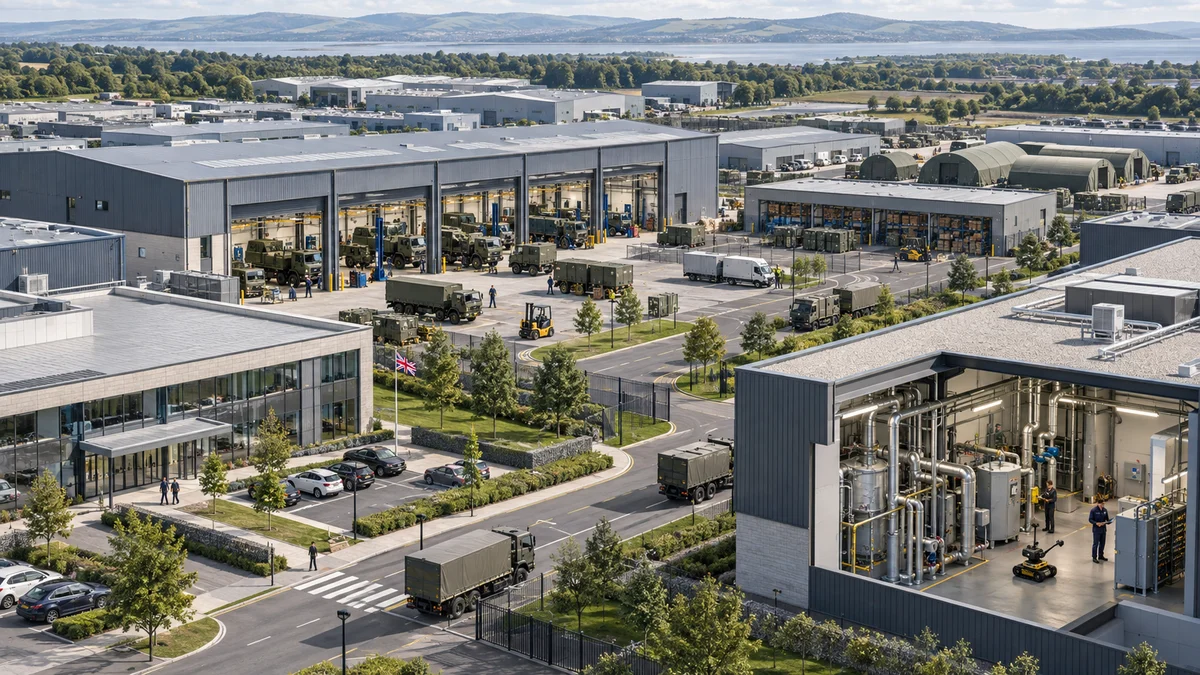
Private 5G in practice
On-site systems
On-premises network components give the organisation control over its local service and how operational devices connect.
Robotics
Private networks carry task and status information for industrial robots and logistics vehicles in estate support environments.
Controlled access
Private-network access controls put device admission and network management under the organisation’s chosen operating arrangements.
The operational connection
Defence estates include workshops, stores, accommodation and infrastructure that must be maintained through changing operational demands. Support teams need a current view of tasks across buildings and service routes.
A private network connects selected logistics and maintenance devices to the estate’s chosen systems. Local edge AI can analyse equipment observations on site, keeping the useful result close to the team responsible for acting on it.
Practical defence estates use cases
A robot dog follows an approved estate-maintenance route, capturing visual and thermal images of building equipment. Private 5G carries the data to a local edge AI application, which highlights a change for the engineering team. The finding is associated with an asset and inspection time.
An authorised engineer reviews the evidence and records the next action in the maintenance system. Follow-up observations and completed work remain attached to the same asset history. The robot supports routine estate inspection, while staff retain the decisions and access arrangements for the task.
A logistics robot or supported vehicle receives a delivery task from the stores application. Private 5G carries progress through the approved service area, and the receiving team confirms the handover against the request. The dispatcher can see outstanding movements in the same system.
When a destination changes, the controller updates the job before the next stage of the route. The delivery record shows what was completed and who accepted it. Robotics handles the routine movement while the stores team manages priorities, exceptions and stock responsibility.
A technician opens an approved work order on a connected tablet in a workshop or service building. Drawings, photographs and previous notes are available through the local application. Private 5G carries the technician’s updates back to the estate system during the visit.
Where remote support is useful, an authorised colleague can review a live view and add advice to the same job record. The completed work and remaining actions are visible to the next shift. The application follows the estate’s permissions rather than creating a separate uncontrolled information store.
Robotics and edge AI
Let an inspection robot gather the plant-room observations. The robot gathers observations or completes its assigned movement; the private network carries the agreed data. Edge AI means processing selected images or sensor readings on local computing infrastructure.
Choose what the application should identify and who receives the result. A reviewed finding can become a work order, a confirmed handover or a record for the next shift, with the supporting evidence kept alongside it.
Explore private AI → Private compute → Managed open-source applications →
Built around the operation
Map support operations and approved device routes first. Equipment, installation and application access follow the estate’s requirements, with a defined security review for the proposed service.
Decide where network functions, edge AI and records are hosted and administered. Agree identities, segmentation, logging and support access with the responsible estate teams.
Planning & costs
We assess your estate, devices and applications, then design connectivity around the work you want to improve. We help build a business case around the opportunity, deployment costs and ongoing support.
We handle the technical assessment and help connect the investment to useful results. The first conversation starts with what you want to achieve.
Start with a focused deployment and expand, or move ahead with a full programme. We shape delivery around your priorities and readiness, and coordinate installation with your operation.
Talk to our teamPlanning questions
No. The deployment must be assessed against the organisation’s requirements. Architecture, equipment, administration and application controls are defined as part of that process.
Compatible cellular devices connect directly; suitable gateways can link other equipment. We check the exact device models, interfaces and application requirements before choosing the design.
Selected analytics can run on local servers, with access and storage designed around the workflow. The application identifies agreed events; staff review the result and retain responsibility for the operational response.
A site plan, the chosen task, device details and the applications involved provide a useful start. We then assess coverage, integration, installation and ongoing support for a defined proposal.
Read the private 5G cost guide →Your operation, connected
Show us the working area, the equipment and the point where information stops flowing. We’ll help turn it into a practical first project.
Coverage and performance are designed around your site, devices and applications. We set out the agreed service and delivery scope in your proposal.
Use cases illustrate how the service can support an operation. Project specifications and commercial terms are confirmed in the agreed proposal and contract.