Payments
Keep operational transactions separate from guest traffic
A private network carries compatible payment terminals on controlled operational connections, giving event teams their own network for trading activity.

Home / Private 5G / Stadiums
Private networks / Stadiums
Give ticketing teams, concessions and stadium operations a connection planned for the busiest moments. Private 5G supports selected match-day devices across entrance plazas, concourses, hospitality and service areas.
Connect the job behind the fan experience: scan the ticket, serve the order, respond to an issue and prepare the concourse for the next wave of people.
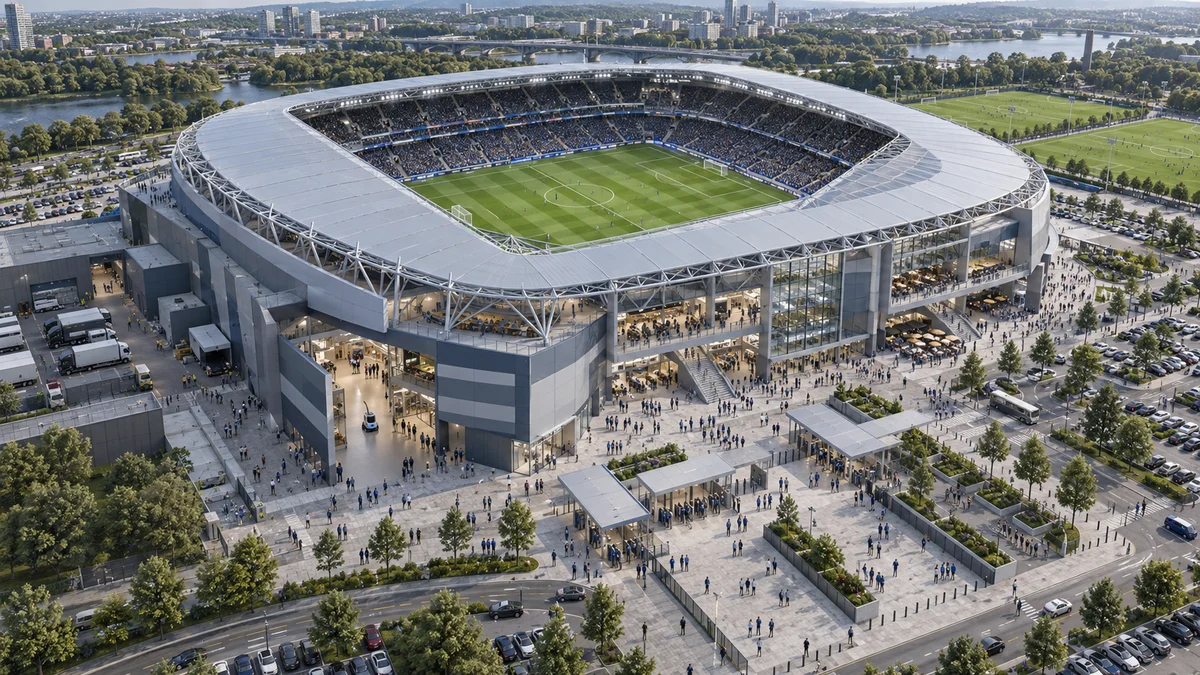
Private 5G in practice
Payments
A private network carries compatible payment terminals on controlled operational connections, giving event teams their own network for trading activity.
Live video
Private 5G carries wireless production camera feeds, supporting flexible camera positions and live media workflows across the venue.
Stadium operations
A permanent private network connects stadium devices with separate operational traffic groups, supporting the teams running the event.
The operational connection
Stadium demand arrives in surges. Thousands of supporters approach the turnstiles before kick-off, visit concessions at half-time and leave through the same public areas after the final whistle. The operating team needs its own view of what is happening as those demands shift.
A private network gives the stadium control over access and traffic priorities for connected operational devices. Ticket scanners, payment terminals, cameras and staff applications can use planned services alongside separately designed fan Wi-Fi and public mobile coverage.
Practical stadiums use cases
A steward checks a supporter’s ticket on a handheld scanner at an entrance plaza. Private 5G connects the device to the ticketing service, while the supervisor sees admission updates through the stadium’s application. When a scan needs assistance, the steward can request help with the relevant gate and ticketing reference instead of leaving the position.
The supervisor assigns a roaming colleague and follows the outstanding requests across the entrances. Once resolved, the ticketing record and support task are updated together. Connectivity is planned for the arrival peak and the ticketing system’s internet or local hosting requirements, so the whole admission workflow is considered rather than only the radio signal beside a gate.
A concourse camera feeds local edge AI configured to identify a growing queue in a marked concession area. Private 5G carries an event and supporting view to the duty supervisor, who checks the scene and contacts the catering lead. The catering team can bring another till into use or redirect a replenishment run through its normal operating process.
Connected payment terminals and staff devices carry the resulting transactions and task updates on planned operational services. The supervisor sees when help has arrived and records the outcome. Comparing these reviewed events across fixtures helps the venue understand where staffing, stock position or concession layout contributes to recurring delays during the short half-time window.
After an area has been released for cleaning, a cleaning robot follows its assigned concourse route. Private 5G carries progress and assistance requests to the facilities application. Onboard edge AI identifies an unexpected obstruction, pauses the affected task and sends an image so the supervisor can see what needs attention before sending a colleague.
The supervisor coordinates the robot’s remaining work with staff cleaning and maintenance tasks. A damaged fitting visible in the image becomes a separate work order, with the concourse location and photograph attached. The next shift sees which areas are complete and which issues remain, giving the venue a shared close-out record before the next fixture or event.
Robotics and edge AI
Join up cleaning robot progress, concourse observations and facilities tasks. Edge AI highlights an agreed event close to the source, while the stadium team keeps ownership of the response.
Choose what the application should identify and who receives the result. A reviewed finding can become a work order, a confirmed handover or a record for the next shift, with the supporting evidence kept alongside it.
Explore private AI → Private compute → Managed open-source applications →
Built around the operation
Plan coverage across gates, concourses, hospitality spaces, the bowl and service routes using the actual fixture-day workflow. Steelwork, stands and crowded areas require a site-specific radio layout.
Size uplink for cameras and define priorities for ticketing, payments and staff applications. Include the upstream connectivity those systems use, with guest Wi-Fi and public mobile coverage considered as complementary services.
Planning & costs
We assess your estate, devices and applications, then design connectivity around the work you want to improve. We help build a business case around the opportunity, deployment costs and ongoing support.
We handle the technical assessment and help connect the investment to useful results. The first conversation starts with what you want to achieve.
Start with a focused deployment and expand, or move ahead with a full programme. We shape delivery around your priorities and readiness, and coordinate installation with your operation.
Talk to our teamPlanning questions
Private 5G connects authorised operational devices. Fan Wi-Fi and public mobile coverage need their own design; distributed antenna systems or other operator-supported coverage solutions can be considered alongside the private network.
Compatible cellular devices connect directly; suitable gateways can link other equipment. We check the exact device models, interfaces and application requirements before choosing the design.
Selected analytics can run on local servers, with access and storage designed around the workflow. The application identifies agreed events; staff review the result and retain responsibility for the operational response.
A site plan, the chosen task, device details and the applications involved provide a useful start. We then assess coverage, integration, installation and ongoing support for a defined proposal.
Read the private 5G cost guide →Your operation, connected
Show us the working area, the equipment and the point where information stops flowing. We’ll help turn it into a practical first project.
Coverage and performance are designed around your site, devices and applications. We set out the agreed service and delivery scope in your proposal.
Use cases illustrate how the service can support an operation. Project specifications and commercial terms are confirmed in the agreed proposal and contract.