20%
Higher scanning productivity in a logistics deployment
Faster scan acknowledgements across more than 100 handheld scanners delivered a 20% improvement in scanning productivity at a logistics operation.

Home / Private 5G / Warehousing
Private networks / Warehouses & logistics
Connect scanners, vehicles and warehouse applications from goods-in to dispatch. Private 5G gives your operation a dedicated mobile network designed around the people and equipment moving through it.
Keep pick confirmations flowing, connect mobile robots to their fleet systems and give supervisors a clearer view of work on the floor. Bring the warehouse, loading bays and yard into one connected operation.
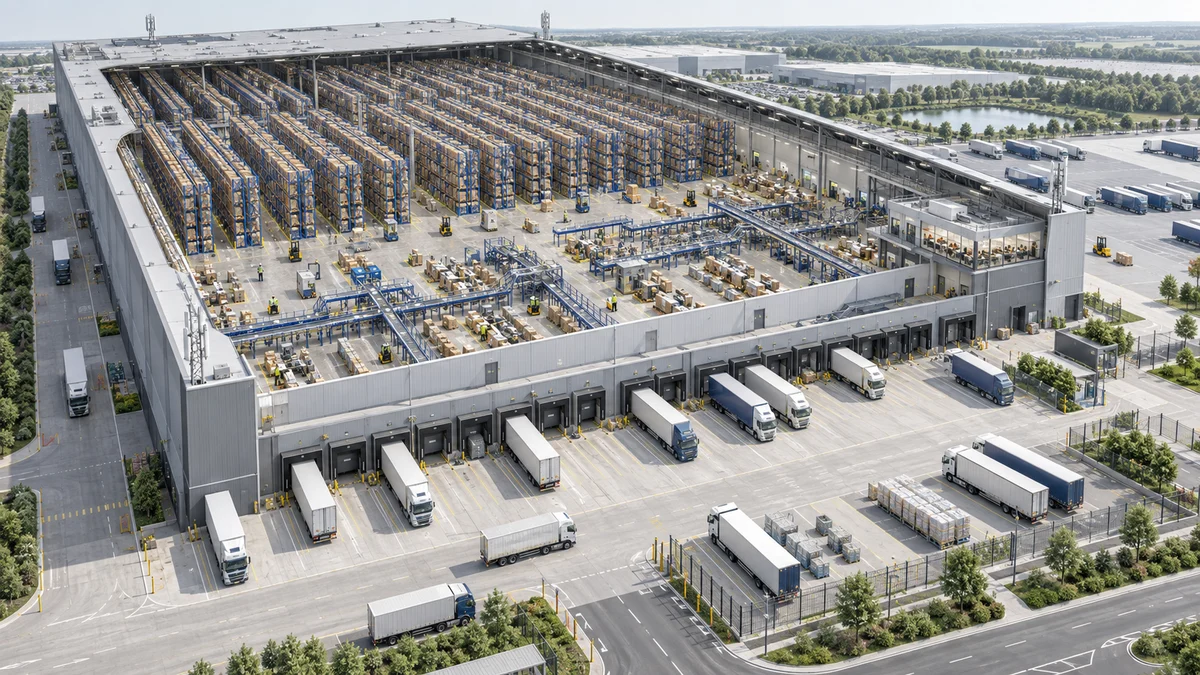
Private 5G in logistics
20%
Faster scan acknowledgements across more than 100 handheld scanners delivered a 20% improvement in scanning productivity at a logistics operation.
70–80%
Stable connectivity supported a 70–80% improvement in warehouse process speed, according to the operation’s manager.
€18k/month
A model for 20–25 mobile robots puts potential savings at up to €18,000 a month through less downtime, higher throughput, reduced supervision and more efficient routing.
Connectivity that follows the work
An item is received, put away, picked, packed and loaded. Each step creates an update that the next person or system relies on. When a scanner waits for confirmation or a vehicle loses its application connection, the interruption can ripple through the rest of the order.
Private 5G connects these mobile workflows across the working area, with managed device access and traffic priorities. It can work alongside existing Wi-Fi and wired systems, extending the network design around tall racking, mezzanines, loading bays and outdoor movements.
Practical warehouse use cases
Build the connection around the tasks your team repeats throughout the shift.
A picker receives the next item on their handheld, scans the location and confirms the quantity. The warehouse management system records the pick and returns the next instruction while the worker moves along the aisle. Private 5G connects the handheld to that system across its working route, keeping the task and the stock record together.
The same flow continues at packing and dispatch, where a scan connects the item to its order, pallet and outbound load. Supervisors see progress as it happens, while staff spend less time repeating transactions or writing down updates to enter later. The benefit is a smoother path from the shelf to the loading bay.
An autonomous mobile robot collects a tote at the picking station and carries it to packing. Its fleet software assigns the job, receives progress updates and coordinates the next collection. Private 5G carries those operational messages as the robot moves between work zones, connecting the fleet with warehouse applications.
When packing priorities change, the fleet system can adjust job allocation and send new instructions to available robots. Supervisors can see completed jobs, charging status and exceptions in the same operational view. The robot supplier’s onboard navigation and safety systems manage local movement, while the private network connects the fleet to the wider production plan.
A colleague needs assistance in a remote aisle or loading area. They raise an alert from a connected handset or wearable, and the safety application presents it to the supervisor alongside location information from the site’s tracking system. Private 5G links that event to the people coordinating the response across the warehouse.
The supervisor contacts the worker, directs a colleague to the right area and keeps the event record updated. Connected cameras and approved monitoring applications can add context at busy loading bays, while digital shift records help the next team understand what happened. The connection supports the warehouse’s established safety procedures with a shared flow of information.
Beyond the warehouse doors
A forklift leaves the aisle to stage a pallet at the dock. A driver arrives at the gate, and the dispatch team confirms which load is ready. Extending the network design beyond the building connects those handovers with the warehouse systems inside.
Vehicle-mounted terminals, yard-management applications and cameras can share arrival, loading and collection information with the dispatch desk. The team gets a clearer picture of goods waiting at the bay and vehicles ready to move.
Bring indoor and outdoor routes into the same project, so coverage follows the actual order journey.
From scanner to stock record
The radio design considers rack heights, stock types, moving vehicles and the routes staff use. Peak device numbers and the mix of scanning, video and robot traffic shape capacity. The project connects the selected devices through to the application, so a completed scan or job update is the useful result.
Bring warehouse management, identity and fleet applications into the design from the start. Compatible cellular devices connect directly; suitable gateways provide a route for other equipment. Local computing can host selected applications and video processing close to the floor.
Explore the wider logistics and warehousing offer → Private compute →
Planning & costs
We assess your estate, devices and applications, then design connectivity around the work you want to improve. We help build a business case around the opportunity, deployment costs and ongoing support.
We handle the technical assessment and help connect the investment to useful results. The first conversation starts with what you want to achieve.
Start with a focused deployment and expand, or move ahead with a full programme. We shape delivery around your priorities and readiness, and coordinate installation with your operation.
Talk to our teamPlanning questions
Start with the task and the cause of the interruption. Coverage, device roaming, authentication and the application can all affect a scanner transaction. Private 5G is an option for mobile operational workflows; Wi-Fi can continue serving suitable users and devices alongside it.
Read the warehouse comparison →Check the exact model, cellular bands and SIM support. Some scanners support private cellular directly, while other workflows may suit a gateway or a device refresh. We bring those choices into the scope before selecting the network equipment.
Yes, it can connect autonomous mobile robots and automated guided vehicles with compatible fleet systems. The design follows the robot supplier’s interfaces and communication requirements, alongside the equipment’s own navigation and safety functions.
Yes. Include loading bays, vehicle routes, gates and staging areas in the site plan. Indoor and outdoor radios, mounting positions, power and backhaul are designed around those working areas.
The footprint, racking, device population, radio design, spectrum, installation and application interfaces shape the project. A site plan and one defined workflow are a useful starting point for a scoped proposal.
Read the private 5G cost guide →From goods-in to dispatch
Show us the route, the devices and the task that loses time. We’ll help bring the network and applications into a practical first project.
Website information and use cases provide general guidance. Performance, coverage, savings and suitability depend on site conditions, equipment, applications, integration and the agreed service scope. Illustrations and worked examples are indicative; third-party results relate to the original deployments.
Information may change or contain errors. Project-specific specifications, delivery commitments and commercial terms are set out in the agreed proposal and contract. External results relate to their original deployments; the staff-time calculation illustrates the stated inputs.